Crossed 7 handwriting
Why some people put a bar through 7, how to see it, and why the bar is not a personality mark.
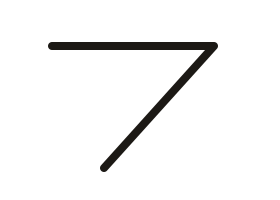 Plain 7: two strokes, a top bar and a diagonal, with nothing through the stem.
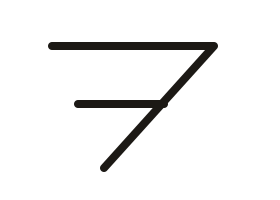 Crossed 7: a short horizontal cuts the diagonal so 7 stays distinct from 1.
Where this comes from
A crossed 7 is a practical distinction. In handwriting where 1 has a flag or a base, an uncrossed 7 can be misread as 1. The bar is common in much of Europe, Latin America, and in technical notes elsewhere.
A plain 7 is the form many American copybooks stop at. Nothing is missing from it. The reader is expected to tell 7 from 1 by context.
What this does not show
The crossbar does not measure carefulness as a trait. It is a convention, like crossing a t. People drop it when they are in a hurry and add it when a number has to be unambiguous.
Do not treat a crossed 7 on a form as evidence about the writer. It is evidence about the digit.
Questions
- Why do people cross their 7s?
- To keep 7 from looking like 1, especially where the handwritten 1 has a serif or a base.
- Is a crossed 7 more correct?
- It is correct where that model was taught. A plain 7 is correct where it was not. Both are readable.
- Does a crossed 7 show a precise personality?
- No. It shows a writing habit used to protect a number. Precision in one digit is not precision as a character.
- Should I cross a 7 in the test if I only sometimes do?
- Pick the form you use in ordinary notes. If you truly do both, either choice is fair, and you can change it from the result.