How do you write a lowercase g
Open hooks and closed loops on g, where the descender comes from, and what it cannot predict.
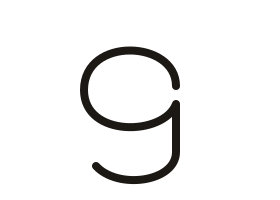 Open g: the bowl sits on the line and the tail hooks without closing.
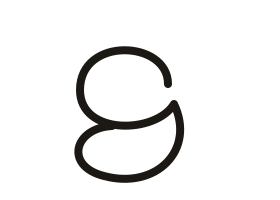 Looped g: the descender returns and closes a loop below the line.
Where this comes from
Copybooks disagree on purpose. Some print models use an open tail, close to the printed g. Joined scripts such as cursive and italic often close a loop so the pen can leave toward the next letter.
The loop is a path for the pen, not a decoration the writer invented. A person who was taught cursive g will loop it even in a note that is otherwise printed.
What this does not show
A looped g does not show imagination, and an open g does not show bluntness. Both are finishes taught to children.
The loop also changes with speed. A closed loop at a desk can open into a hook on a postcard. That is the pen moving faster, not a change of personality.
Questions
- Is a looped g the cursive g?
- It is the usual cursive and italic finish. The pen drops below the baseline and comes back up so it can join the next letter.
- Is an open g wrong?
- No. Print models and many adult hands leave the tail open. The letter is still a g if the bowl and the descender are there.
- Does the g loop mean the writer is expressive?
- No. The loop is a taught motor path. Expressiveness is not visible in one descender.
- What about the two-storey printed g?
- The printed g has an ear and a closed lower bowl. This test uses the two handwritten finishes people actually produce: an open hook and a loop.