How do you write a lowercase y
A straight tail or a looped tail on y, where the descender comes from, and what it cannot predict.
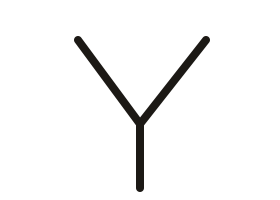 Straight tail: the descender leaves the line and does not come back.
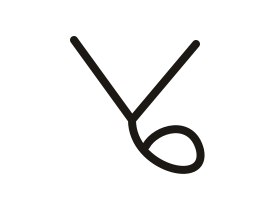 Looped tail: the descender returns and closes a loop below the line.
Where this comes from
Print models often end y with a straight descender, close to the printed letter. Joined scripts such as cursive and italic close a loop so the pen can leave toward the next letter. The loop is a path, the same job as the loop on g.
A person taught a looped y will loop it even in a note that is otherwise printed. A person taught the straight tail keeps it unless they are copying a joined line.
What this does not show
A looped y does not show emotion or imagination, and a straight y does not show bluntness. Both are finishes taught to children.
Speed opens loops. A closed loop at a desk can become a straight tail on a postcard. That is the pen moving faster, not a change of personality.
Questions
- Is a looped y the cursive y?
- It is the usual cursive and italic finish. The pen drops below the line and comes back up so it can join the next letter.
- Is a straight y wrong?
- No. Print models and many adult hands leave the tail straight. The letter is still a y if the fork and the descender are there.
- Does the y loop mean the writer is expressive?
- No. The loop is a taught motor path. Expressiveness is not visible in one descender.
- How is the y loop different from the g loop?
- Same kind of finish, different letter. The test asks for y on its own. A looped g does not decide the y.