The dot on a handwritten i
A close dot, a high dot, and a circle in place of the dot: where each comes from, and what a dot cannot prove.
 Close dot: a small mark just above the stem, the usual school place.
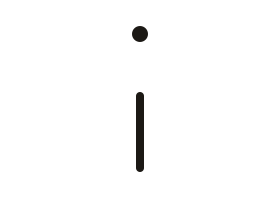 High dot: the mark sits well above the stem, often after the hand has already moved on.
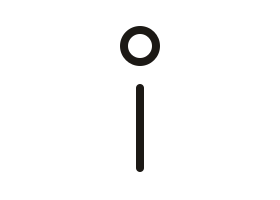 A circle: a round mark instead of a dot.
Where this comes from
The dot is a separate mark. School models put it close above the stem, after the letter or after the word. A high dot is often the same habit done late: the hand has already traveled, and the dot lands farther up the page.
A circle instead of a dot is lettering. People pick it up from a hand they liked, or from a stretch of writing in which every i got a ring. It is a learned finish, like a flourish on an ampersand.
What this does not show
Graphology reads a high dot as imagination and a circle as a wish to be noticed. Those readings are not supported well enough to use. A dot's place is where the pen came down.
Fast notes drop the dot entirely. A missing dot is speed, not a fourth personality. This page is about the Latin i. Chinese writing does not use this mark.
Questions
- What does a high dot on i mean?
- It means the dot sits high above the stem. It does not mean imagination, attention, or a mood.
- Why do people circle the dot on i?
- Because they learned a round mark in place of a dot. It is a finish. It is not evidence of creativity.
- Is a close dot the correct one?
- It is the place most copybooks show. A high dot and a circle are forms people really write. The test asks for the closest, not an approved one.
- What if I often forget the dot?
- That is common in a hurry. For the test, pick the dot you make when you do make one.